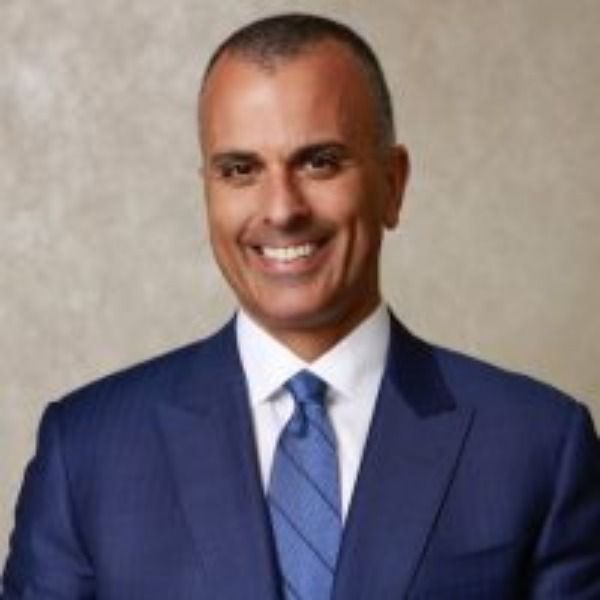
Joseph Terranova
About Speaker Joseph Terranova...
Joseph M. Terranova is a risk management expert, a panelist on CNBC's Fast Money, author, and the senior managing director for Virtus Investment Partners, an asset management firm with more than $101 billion under management and listed on the Nasdaq exchange under the ticker symbol VRTS.
Terranova was elevated into that position in May 2014. He joined Phoenix Investment Partners – now named Virtus Investment Partners – in June 2008.
In his current role, Terranova works with Virtus' investment management teams and the financial advisors who sell the company's investment products, providing insight into the domestic and global investing landscape for such asset classes as equities, commodities, fixed income and currencies.
He is the author of Buy High, Sell Higher, which gives practical advice on investing based on his experience as a trader. In the book, he dispenses advice on how to determine the optimal moment to buy a stock, when to sell it, how to protect yourself against sudden reversals in the market, and how to capitalize on moments when other investors are retreating.
Prior to joining Virtus Investment Partners in 2008, Terranova spent 18 years at MBF Clearing Corp., rising to the position of Director of Trading for the company and its subsidiaries. In this capacity, he managed more than 300 traders and support staff for MBF, one of the New York Mercantile Exchange's largest firms. His work was highlighted as the feature story in the June 2004 issue of Futures magazine.
Terranova is perhaps best known for his risk management skills, honed while overseeing MBF's proprietary trading operations during some of the most calamitous times for the U.S. markets, including the first Gulf War, the 1998 Asian Crisis, 9/11, and the collapse of Amaranth Advisors. During those times there was never a loss at MBF due to market anomalies. In fact, the firm continued to trade profitably and grows its business.
In 2003, Terranova was one of the first Wall Street professionals to make an early call for higher energy, natural resource and commodity prices. In June 2008 he cautioned investors to move to the sidelines in commodities. During March 2009, he encouraged investors to ignore the global "embracement of pessimism" and overweight equities.
More About Joseph Terranova...
Before joining MBF, Terranova held positions at both Swiss Banking Corp. and JP Morgan Securities.
With a strong commitment to charitable work, Terranova created the 501c.3 South Nassau Rock organization. He also established "Bossy's Bunch," a program that rewards excellence in the classroom for elementary students.
Terranova graduated from the Peter J. Tobin College of Business at St. John's University in 1988 with a B.S. in finance.
About Speaker Joseph Terranova...
Joseph M. Terranova is a risk management expert, a panelist on CNBC's Fast Money, author, and the senior managing director for Virtus Investment Partners, an asset management firm with more than $101 billion under management and listed on the Nasdaq exchange under the ticker symbol VRTS.
Terranova was elevated into that position in May 2014. He joined Phoenix Investment Partners – now named Virtus Investment Partners – in June 2008.
In his current role, Terranova works with Virtus' investment management teams and the financial advisors who sell the company's investment products, providing insight into the domestic and global investing landscape for such asset classes as equities, commodities, fixed income and currencies.
He is the author of Buy High, Sell Higher, which gives practical advice on investing based on his experience as a trader. In the book, he dispenses advice on how to determine the optimal moment to buy a stock, when to sell it, how to protect yourself against sudden reversals in the market, and how to capitalize on moments when other investors are retreating.
Prior to joining Virtus Investment Partners in 2008, Terranova spent 18 years at MBF Clearing Corp., rising to the position of Director of Trading for the company and its subsidiaries. In this capacity, he managed more than 300 traders and support staff for MBF, one of the New York Mercantile Exchange's largest firms. His work was highlighted as the feature story in the June 2004 issue of Futures magazine.
Terranova is perhaps best known for his risk management skills, honed while overseeing MBF's proprietary trading operations during some of the most calamitous times for the U.S. markets, including the first Gulf War, the 1998 Asian Crisis, 9/11, and the collapse of Amaranth Advisors. During those times there was never a loss at MBF due to market anomalies. In fact, the firm continued to trade profitably and grows its business.
In 2003, Terranova was one of the first Wall Street professionals to make an early call for higher energy, natural resource and commodity prices. In June 2008 he cautioned investors to move to the sidelines in commodities. During March 2009, he encouraged investors to ignore the global "embracement of pessimism" and overweight equities.
More About Joseph Terranova...
Before joining MBF, Terranova held positions at both Swiss Banking Corp. and JP Morgan Securities.
With a strong commitment to charitable work, Terranova created the 501c.3 South Nassau Rock organization. He also established "Bossy's Bunch," a program that rewards excellence in the classroom for elementary students.
Terranova graduated from the Peter J. Tobin College of Business at St. John's University in 1988 with a B.S. in finance.
How to Invest in Your Leadership: Lessons from Wall Street
From Wall Street to Main Street: How Money Matters Affect You
Invest Like an Institution: How to Handle Volatility and Predictability
How much time and energy do you put into big money decisions? When you research a new car purchase, for example, do you consult a few car review websites, ask your close friends, and take several test rides before you buy or do you buy what someone says is a "sure thing"? If you're like most people you don't impulse buy a car, but you do impulse buy with investments.
If you want to see better market results, you have to learn to invest like an institution. You need to understand how...
Set Yourself Up for Success: Morning Routines
Covers & Jackets