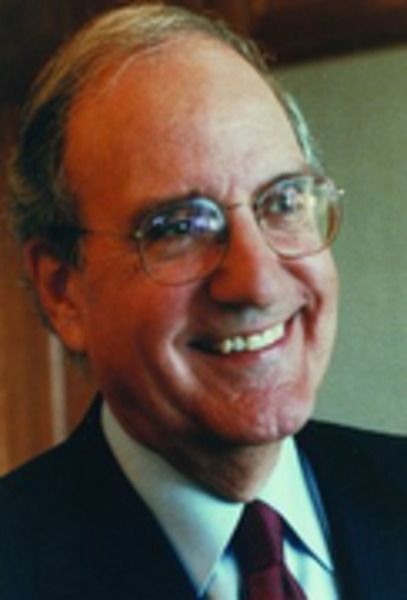
George Mitchell
George J. Mitchell is the co-chair of Piper Rudnick's Government Controversies practice group. George Mitchell entered the U.S. Senate in 1980 when he was appointed to complete the unexpired term of Senator Edmund S Muskie, who resigned to become secretary of state. Before the 1982 election, George Mitchell trailed in opinion polls by 36 points. George Mitchell's stunning come-from-behind victory gave him 61 percent of the votes case. George Mitchell went on to an illustrious career in the Senate that spanned 14 years.
In 1996, the governments of the United Kingdom and Northern Ireland asked George Mitchell to chair the peace negotiations in Northern Ireland. George Mitchell led the negotiations for two years, work that ultimately resulted in a historic accord that ended decades of conflict. In May 1998, the agreement was overwhelmingly endorsed by voters in Northern Ireland and the Irish Republic. George Mitchell has received numerous awards and honors recognizing his service in the peace talks. These include the Presidential Medal of Freedom, the highest civilian honor the U.S. government can give; the Philadelphia Liberty Medal; the Truman Institute Peace Prize; the German (Hesse) Peace Prize; and the United Nations (UNESCO) Peace Prize.
While in the Senate, George Mitchell served on the Finance, Veterans Affairs, and Environment and Public Works committees. George Mitchell led the successful 1990 reauthorization of the Clean Air Act, including new controls on acid rain toxins. George Mitchell led the Senate to passage of the nation's first child care bill and was principal author of the low-income housing tax credit program. George Mitchell was instrumental in the passage of the Americans with Disabilities Act, landmark legislation extending civil rights protections to the disabled. George Mitchell's efforts led to the passage of a higher education bill that expanded opportunities for millions of Americans.
George Mitchell was stationed in Berlin, Germany, as an officer in the U.S. Army Counter-Intelligence Corps from 1954 to 1956. From 1960 to 1962, George Mitchell was a trial lawyer in the Department of Justice in Washington, D.C. From 1962 to 1965, he served as executive assistant to Senator Muskie. In 1965, George Mitchell returned to Maine where he engaged in the private practice of law in Portland until 1977. George Mitchell was then appointed U.S. attorney for Maine, a position he held until 1979, when he was appointed U.S. district judge for Maine. He resigned that position in 1980 to accept his Senate appointment.
After leaving the Senate, George Mitchell joined the law firm Verner, Liipfert, Bernhard, McPherson and Hand, which merged with Piper Rudnick in 2003. Senator George Mitchell also serves as Chairman of the Board of the Walt Disney Company, Federal Express, and Staples, Inc. Senator Mitchell is also chancellor of The Queen's University of Northern Ireland. George Mitchell served as chairman of the International Crisis Group, a nonprofit organization dedicated to the prevention of crises in international affairs, as chairman of the Special Commission investigating allegations of impropriety in the bidding process for the Olympic Games, and as chairman of the National Health Care Commission.
George Mitchell is the author of four books: Men of Zeal, co-authored with his colleague, then-Senator William S. Cohen, on the Iran-Contra investigation; World on Fire, speaking to the threat of the greenhouse effect and recommending steps to curb it; Not For America Alone: The Triumph of Democracy and The Fall of Communism; and Making Peace, an account of his experiences in Northern Ireland.George J. Mitchell is the co-chair of Piper Rudnick's Government Controversies practice group. George Mitchell entered the U.S. Senate in 1980 when he was appointed to complete the unexpired term of Senator Edmund S Muskie, who resigned to become secretary of state. Before the 1982 election, George Mitchell trailed in opinion polls by 36 points. George Mitchell's stunning come-from-behind victory gave him 61 percent of the votes case. George Mitchell went on to an illustrious career in the Senate that spanned 14 years.
In 1996, the governments of the United Kingdom and Northern Ireland asked George Mitchell to chair the peace negotiations in Northern Ireland. George Mitchell led the negotiations for two years, work that ultimately resulted in a historic accord that ended decades of conflict. In May 1998, the agreement was overwhelmingly endorsed by voters in Northern Ireland and the Irish Republic. George Mitchell has received numerous awards and honors recognizing his service in the peace talks. These include the Presidential Medal of Freedom, the highest civilian honor the U.S. government can give; the Philadelphia Liberty Medal; the Truman Institute Peace Prize; the German (Hesse) Peace Prize; and the United Nations (UNESCO) Peace Prize.
While in the Senate, George Mitchell served on the Finance, Veterans Affairs, and Environment and Public Works committees. George Mitchell led the successful 1990 reauthorization of the Clean Air Act, including new controls on acid rain toxins. George Mitchell led the Senate to passage of the nation's first child care bill and was principal author of the low-income housing tax credit program. George Mitchell was instrumental in the passage of the Americans with Disabilities Act, landmark legislation extending civil rights protections to the disabled. George Mitchell's efforts led to the passage of a higher education bill that expanded opportunities for millions of Americans.
George Mitchell was stationed in Berlin, Germany, as an officer in the U.S. Army Counter-Intelligence Corps from 1954 to 1956. From 1960 to 1962, George Mitchell was a trial lawyer in the Department of Justice in Washington, D.C. From 1962 to 1965, he served as executive assistant to Senator Muskie. In 1965, George Mitchell returned to Maine where he engaged in the private practice of law in Portland until 1977. George Mitchell was then appointed U.S. attorney for Maine, a position he held until 1979, when he was appointed U.S. district judge for Maine. He resigned that position in 1980 to accept his Senate appointment.
After leaving the Senate, George Mitchell joined the law firm Verner, Liipfert, Bernhard, McPherson and Hand, which merged with Piper Rudnick in 2003. Senator George Mitchell also serves as Chairman of the Board of the Walt Disney Company, Federal Express, and Staples, Inc. Senator Mitchell is also chancellor of The Queen's University of Northern Ireland. George Mitchell served as chairman of the International Crisis Group, a nonprofit organization dedicated to the prevention of crises in international affairs, as chairman of the Special Commission investigating allegations of impropriety in the bidding process for the Olympic Games, and as chairman of the National Health Care Commission.
George Mitchell is the author of four books: Men of Zeal, co-authored with his colleague, then-Senator William S. Cohen, on the Iran-Contra investigation; World on Fire, speaking to the threat of the greenhouse effect and recommending steps to curb it; Not For America Alone: The Triumph of Democracy and The Fall of Communism; and Making Peace, an account of his experiences in Northern Ireland.