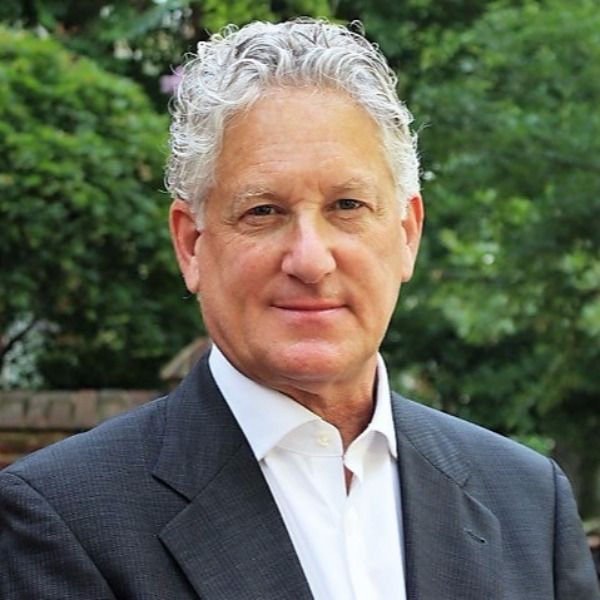
Harry G. Broadman
Demystifying The Future Of Business Growth In The Global Economy
HARRY G. BROADMAN
Demystifying The Future Of Business Growth In The Global Economy
• Former International Private Equity Executive; Founder of PwC's Global Business Strategy Management Consulting Practice; PwC Chief Economist; U.S. Assistant Trade Representative; Chief of Staff, President's Council of Economic Advisers; Senior World Bank Official; RAND Corporation; Albright Stonebridge; Harvard Faculty Member; Professional Committee Staff, U.S. Senate; Brookings Institution
• Currently Johns Hopkins Faculty Member; CEO, Emerging Markets Transaction Advisory Firm; Independent Corporate Board Director for 3 Firms; Expert Witness: Trade, Antitrust, Regulation, FCPA, Financial Damage Valuation; Columnist: Forbes; Newsweek; Gulf News
• Seasoned Operational Executive and C-Suite Adviser Seizing High-Growth Global 'First Mover' Advantage; Designing Novel Strategies Reducing Risk; Implementing Robust Compliance Protocols; Developing Nimble Supply Chains; Devising PPPs/CSR Co-Investments
• Expertise in 3 Broad-Based Industry Sectors: Financial Services; Infrastructure Industries; Energy, Mining, and Natural Resources
• Extensive Geographic Experience in 75+ Emerging Markets Spanning 5 Continents, including China, India, ASEAN, LATAM, Eastern Europe, The Balkans, Russia and CIS, Turkey, Africa, and the Middle East
• Author of best-selling book: Africa's Silk Road: China and India's New Economic Frontier
Harry G. Broadman is a globally renowned executive, practitioner and authority on enterprise restructuring, new product market entry, cross-border geographic expansion, and co-investment strategic alliances to sharpen international business competitiveness. He brings to audiences a unique combination of fundamentally insightful and pragmatic views about how commercial, financial and policy changes that drive international markets, will alter enterprises' opportunity-risk tradeoffs in ways few ever could have predicted.
Rather than using a 'rear-view mirror' approach, Broadman provides a prospective prism to frame critical business decision-making challenges. Moreover, he exposes the ways markets intrinsically tend to operate in 'non-linear' patterns. Aside from leaving audiences with concrete takeaways, his speeches are entertaining and infused with his infectious sense of humor.
An early serial entrepreneur, Broadman re-invented himself more than a handful of times—not only in an interdisciplinary fashion, but also across greatly differentiated senior roles in the private sector, interspersed with stints as a high-level policy maker and regulator. He emerged as a genuine thought-leader on the unforeseen dynamics that have changed the underlying structure and character of world markets long before the term "globalization" was commonplace. These insights shaped his career focus on strategies that propel firms' competitiveness, especially in emerging markets, the parts of the world toward which Broadman has always had a strong predisposition.
Broadman has extensive experience in: Structuring complex corporate cross-border finance, investment and trade transactions; Negotiating and leveraging sovereign international trade agreements and investment treaties as well as advising on CFIUS-related matters; Developing multidimensional risk-mitigation and FCPA compliance protocols; Executing robust corporate governance reforms, especially proactive activist stakeholder strategies; Championing adoption of productivity-enhancing innovation; and Testifying as an Expert Witness on trade, antitrust, regulation and economic damages cases.
A strategic advisor to C-suites and Boards, he has worked for companies as diverse as GE, IBM, Coca-Cola, Canon, Exxon-Mobil, Valmet, Corning, Heineken, Merck, Walmart, Deere, the Canadian Pension Plan Investment Board, Intel, ICANN, SunEdison, Illinois Tool Works, Westinghouse, Siemens, Standard Chartered, Microsoft, Manitowoc, PPG, Tyco, Caterpillar, Dow, McCormick, CEMEX, and Avon.
Broadman has been interviewed numerous times on television and radio and been widely quoted in the electronic/print media, including The New York Times, The Wall Street Journal, The Financial Times, BBC, CNN, NPR, CNBC, CCTV, Fortune, CBC, The People's Daily, Time, Kommersant, Australia Broadcasting Corporation, Business Africa, El Pais, Le Monde, Nihon Keizai Shinbun, and The Washington Post.
At present, Broadman is CEO and Managing Partner of Proa Global Partners LLC, a global cross-border investment transaction firm that provides operational, field-level advice on the design and execution of deals in emerging markets. Clients include corporations, banks, private equity firms, institutional investors, sovereign wealth funds and family offices and high net worth individuals.
Concurrently, he is on the Johns Hopkins University Faculty, where he serves as Director of Johns Hopkins' new Council on Global Enterprise and Emerging Markets as well as a Senior Fellow at Johns Hopkins' Foreign Policy Institute. He is also a monthly business columnist for Forbes, Newsweek-International and Gulf News. In addition, Broadman is engaged by the National Association of Corporate Directors (NACD) as a Master Workshop Faculty Member.
Broadman serves or has recently served on the Boards of Directors or Advisors of: ArmorText, a cybersecurity end-to-end enterprise-wide communication services provider; PartnersGlobal, an international alternative dispute resolution (ADR) entity operating in 22 countries; The Lake Tanganyika Floating Health Clinic, a healthcare and telecom services provider across 4 African countries; The Global Business School Network; The Russian-American Chamber of Commerce; and The Corporate Council on Africa.
In 2015, Broadman stepped down as Senior Managing Director at PricewaterhouseCoopers (PwC), where he founded and led PwC's Global Business Growth Investment Management Consulting Practice, that structured investment operations at the field-level for U.S. and non-U.S. Fortune 100 corporates, private equity firms and investment houses. In addition to running PwC's management consultancy, Broadman served as PwC's Chief Economist, working with the firm's Audit and Tax Practices.
Before joining PwC, he was Managing Director and a member of the Investment Committee at Albright Capital Management, an international private equity and alternative strategy investment fund chaired by Madeleine Albright. He was also Managing Director of The Albright Group (now Albright Stonebridge), a business diplomacy consultancy.
Prior to that, he was a senior official at the World Bank, where he oversaw the Bank's largest sovereign finance operations and enterprise restructuring investments in China; Russia and the Former Soviet Union states; and the Balkans. He also served as Economic Advisor for the entire Africa Region.
Earlier, Broadman worked in the White House as Chief of Staff of the President's Council of Economic Advisers during the first Gulf War and the Savings and Loan Crisis.
He was then appointed as United States Assistant Trade Representative. In this position, he led the U.S. negotiations on international trade and investment across all services industries as part of the establishment of both NAFTA and the WTO. He also managed all negotiations of U.S. Bilateral Investment Treaties (BITs) with other sovereigns. He was a Board Member of the Overseas Private Investment Corporation (OPIC) and served on the White House Committee on Foreign Investment in the U.S. (CFIUS), which assesses national security impacts of inbound investment.
Broadman came to the Executive Branch after serving as a Senior Professional Staff Member of the U.S. Senate Committee on Governmental Affairs, then chaired by John Glenn, during which time Broadman was a core drafter of the Omnibus Trade and Competitiveness Act.
Prior to his government service, Broadman was on the Harvard University faculty; staff member at the RAND Corporation; Assistant Director, Center for Energy Policy at Resources for the Future, Inc.; and fellow at the Brookings Institution.
He has authored several books and numerous professional articles published in a wide array of peer-reviewed finance, economics, law, and foreign policy journals. His most recent books are: Africa's Silk Road: China and India's New Economic Frontier; From Disintegration to Reintegration: Russia and the Former Soviet Union in the Global Economy; and The State As Shareholder: China's Management of Enterprise Assets.
Broadman is a lifetime member of the Council on Foreign Relations and a member of The Bretton Woods Committee. He received an A.B. in economics and history, magna cum laude, from Brown University, where he was elected to Phi Beta Kappa, and an A.M. and Ph.D. in economics from the University of Michigan.
HARRY G. BROADMAN
Demystifying The Future Of Business Growth In The Global Economy
• Former International Private Equity Executive; Founder of PwC's Global Business Strategy Management Consulting Practice; PwC Chief Economist; U.S. Assistant Trade Representative; Chief of Staff, President's Council of Economic Advisers; Senior World Bank Official; RAND Corporation; Albright Stonebridge; Harvard Faculty Member; Professional Committee Staff, U.S. Senate; Brookings Institution
• Currently Johns Hopkins Faculty Member; CEO, Emerging Markets Transaction Advisory Firm; Independent Corporate Board Director for 3 Firms; Expert Witness: Trade, Antitrust, Regulation, FCPA, Financial Damage Valuation; Columnist: Forbes; Newsweek; Gulf News
• Seasoned Operational Executive and C-Suite Adviser Seizing High-Growth Global 'First Mover' Advantage; Designing Novel Strategies Reducing Risk; Implementing Robust Compliance Protocols; Developing Nimble Supply Chains; Devising PPPs/CSR Co-Investments
• Expertise in 3 Broad-Based Industry Sectors: Financial Services; Infrastructure Industries; Energy, Mining, and Natural Resources
• Extensive Geographic Experience in 75+ Emerging Markets Spanning 5 Continents, including China, India, ASEAN, LATAM, Eastern Europe, The Balkans, Russia and CIS, Turkey, Africa, and the Middle East
• Author of best-selling book: Africa's Silk Road: China and India's New Economic Frontier
Harry G. Broadman is a globally renowned executive, practitioner and authority on enterprise restructuring, new product market entry, cross-border geographic expansion, and co-investment strategic alliances to sharpen international business competitiveness. He brings to audiences a unique combination of fundamentally insightful and pragmatic views about how commercial, financial and policy changes that drive international markets, will alter enterprises' opportunity-risk tradeoffs in ways few ever could have predicted.
Rather than using a 'rear-view mirror' approach, Broadman provides a prospective prism to frame critical business decision-making challenges. Moreover, he exposes the ways markets intrinsically tend to operate in 'non-linear' patterns. Aside from leaving audiences with concrete takeaways, his speeches are entertaining and infused with his infectious sense of humor.
An early serial entrepreneur, Broadman re-invented himself more than a handful of times—not only in an interdisciplinary fashion, but also across greatly differentiated senior roles in the private sector, interspersed with stints as a high-level policy maker and regulator. He emerged as a genuine thought-leader on the unforeseen dynamics that have changed the underlying structure and character of world markets long before the term "globalization" was commonplace. These insights shaped his career focus on strategies that propel firms' competitiveness, especially in emerging markets, the parts of the world toward which Broadman has always had a strong predisposition.
Broadman has extensive experience in: Structuring complex corporate cross-border finance, investment and trade transactions; Negotiating and leveraging sovereign international trade agreements and investment treaties as well as advising on CFIUS-related matters; Developing multidimensional risk-mitigation and FCPA compliance protocols; Executing robust corporate governance reforms, especially proactive activist stakeholder strategies; Championing adoption of productivity-enhancing innovation; and Testifying as an Expert Witness on trade, antitrust, regulation and economic damages cases.
A strategic advisor to C-suites and Boards, he has worked for companies as diverse as GE, IBM, Coca-Cola, Canon, Exxon-Mobil, Valmet, Corning, Heineken, Merck, Walmart, Deere, the Canadian Pension Plan Investment Board, Intel, ICANN, SunEdison, Illinois Tool Works, Westinghouse, Siemens, Standard Chartered, Microsoft, Manitowoc, PPG, Tyco, Caterpillar, Dow, McCormick, CEMEX, and Avon.
Broadman has been interviewed numerous times on television and radio and been widely quoted in the electronic/print media, including The New York Times, The Wall Street Journal, The Financial Times, BBC, CNN, NPR, CNBC, CCTV, Fortune, CBC, The People's Daily, Time, Kommersant, Australia Broadcasting Corporation, Business Africa, El Pais, Le Monde, Nihon Keizai Shinbun, and The Washington Post.
At present, Broadman is CEO and Managing Partner of Proa Global Partners LLC, a global cross-border investment transaction firm that provides operational, field-level advice on the design and execution of deals in emerging markets. Clients include corporations, banks, private equity firms, institutional investors, sovereign wealth funds and family offices and high net worth individuals.
Concurrently, he is on the Johns Hopkins University Faculty, where he serves as Director of Johns Hopkins' new Council on Global Enterprise and Emerging Markets as well as a Senior Fellow at Johns Hopkins' Foreign Policy Institute. He is also a monthly business columnist for Forbes, Newsweek-International and Gulf News. In addition, Broadman is engaged by the National Association of Corporate Directors (NACD) as a Master Workshop Faculty Member.
Broadman serves or has recently served on the Boards of Directors or Advisors of: ArmorText, a cybersecurity end-to-end enterprise-wide communication services provider; PartnersGlobal, an international alternative dispute resolution (ADR) entity operating in 22 countries; The Lake Tanganyika Floating Health Clinic, a healthcare and telecom services provider across 4 African countries; The Global Business School Network; The Russian-American Chamber of Commerce; and The Corporate Council on Africa.
In 2015, Broadman stepped down as Senior Managing Director at PricewaterhouseCoopers (PwC), where he founded and led PwC's Global Business Growth Investment Management Consulting Practice, that structured investment operations at the field-level for U.S. and non-U.S. Fortune 100 corporates, private equity firms and investment houses. In addition to running PwC's management consultancy, Broadman served as PwC's Chief Economist, working with the firm's Audit and Tax Practices.
Before joining PwC, he was Managing Director and a member of the Investment Committee at Albright Capital Management, an international private equity and alternative strategy investment fund chaired by Madeleine Albright. He was also Managing Director of The Albright Group (now Albright Stonebridge), a business diplomacy consultancy.
Prior to that, he was a senior official at the World Bank, where he oversaw the Bank's largest sovereign finance operations and enterprise restructuring investments in China; Russia and the Former Soviet Union states; and the Balkans. He also served as Economic Advisor for the entire Africa Region.
Earlier, Broadman worked in the White House as Chief of Staff of the President's Council of Economic Advisers during the first Gulf War and the Savings and Loan Crisis.
He was then appointed as United States Assistant Trade Representative. In this position, he led the U.S. negotiations on international trade and investment across all services industries as part of the establishment of both NAFTA and the WTO. He also managed all negotiations of U.S. Bilateral Investment Treaties (BITs) with other sovereigns. He was a Board Member of the Overseas Private Investment Corporation (OPIC) and served on the White House Committee on Foreign Investment in the U.S. (CFIUS), which assesses national security impacts of inbound investment.
Broadman came to the Executive Branch after serving as a Senior Professional Staff Member of the U.S. Senate Committee on Governmental Affairs, then chaired by John Glenn, during which time Broadman was a core drafter of the Omnibus Trade and Competitiveness Act.
Prior to his government service, Broadman was on the Harvard University faculty; staff member at the RAND Corporation; Assistant Director, Center for Energy Policy at Resources for the Future, Inc.; and fellow at the Brookings Institution.
He has authored several books and numerous professional articles published in a wide array of peer-reviewed finance, economics, law, and foreign policy journals. His most recent books are: Africa's Silk Road: China and India's New Economic Frontier; From Disintegration to Reintegration: Russia and the Former Soviet Union in the Global Economy; and The State As Shareholder: China's Management of Enterprise Assets.
Broadman is a lifetime member of the Council on Foreign Relations and a member of The Bretton Woods Committee. He received an A.B. in economics and history, magna cum laude, from Brown University, where he was elected to Phi Beta Kappa, and an A.M. and Ph.D. in economics from the University of Michigan.
Are You Ready for the New Global Corporate Rivals?
As these businesses scour the global for high growth market opportunities, they are being drawn to the emerging markets.
But it's not just advanced country businesses who are pondering investment in emerging markets. Multinationals out of...
Is China Really Destined To Be An Economic Powerhouse?
While at present, doubts are voiced due to the current slowdown in China's output and the bubble in its real estate sector, at the fundamental level those concerns are widely seen as temporary speed-bumps in China's inexorable march to be the world's economic captain.
A...
Do Corporate Social Responsibility Programs Payoff?
The CSR fabric is fraying.
Increasingly, the intended beneficiaries of traditional CSR programs, especially those in developing countries, are finding the deeds are not matching the words.
Many of the targeted groups are made better off; unfortunately, however, some CSR initiatives have unwittingly ratified status quo ante in-country socio-economic imbalances.
Worse still, some programs have actually introduced new distortions, pitting one community...
Managing Overseas Corruption Risks.
Corruption has become one of the most pervasive and pernicious risks facing corporations, banks, private equity funds and other investors in the international marketplace.
Not only can corruption add sizeable costs to the bottom line and engender damage to reputations and brand images for many years, it can also result in very serious criminal penalties, including imprisonment, and very large fines under the FCPA and the UK Anti-Bribery Law, among similar...
Is Putin Recreating the Soviet Empire?
For 70 years before then, with the formation of the bloc, Eurasian continent's long economic history of international commerce with much of the rest of the world was interrupted, largely isolating almost half a billion people from the modern global marketplace.
Under Vladimir Putin's rule over the past decade and a half, two new regional...
Why the Sudden Interest in Doing Business in Africa?
A few niche private equity firms were the first to make serious inroads into the continent more than a decade ago. But only more recently have a growing number of multinational corporations and the largest private equity firms, as well as a variety of other institutional investors, "discovered" Africa.
Still, too few business leaders and...